
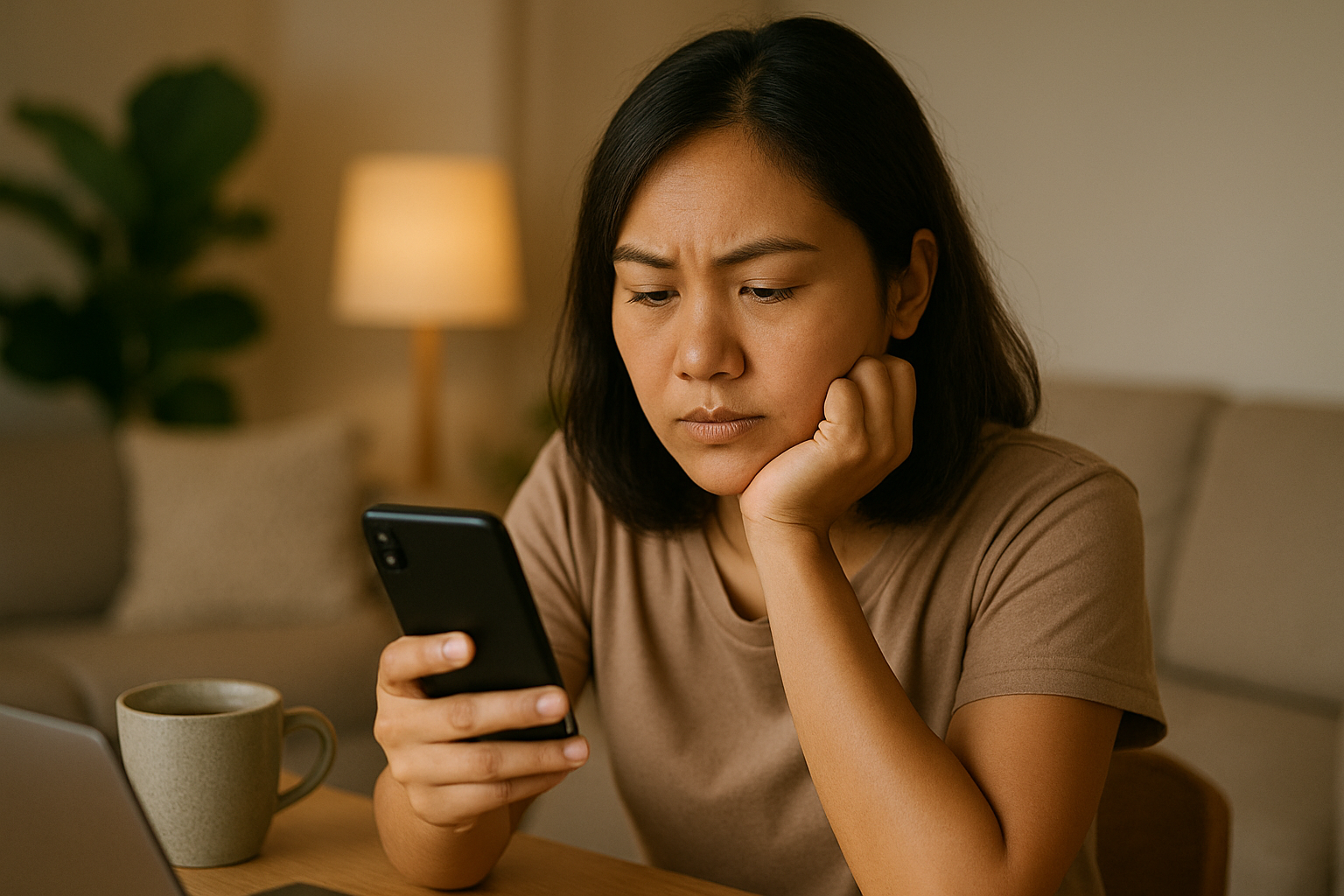
I shop online a lot. Like most moms, I love the convenience: no traffic, no lines, and everything from dish racks to earbuds can arrive in just a few days. And like most of us, I also rely heavily on reviews before buying. But one day, after ordering a “highly rated” kitchen gadget that looked perfect in photos, I realized the reviews had fooled me.
When it arrived, the handle was flimsy, the color wasn’t what I ordered, and it barely worked. That’s when I started paying more attention. Since then, I’ve learned to tell whether a review on Shopee or Lazada is real or not, and honestly, it’s saved me from wasting money many times.
Here’s what I’ve learned (the hard way) about spotting fake reviews.
1. Check “Verified Purchase” Badges or Reviewer Profiles—if Possible
A lot of online tips on spotting fake reviews will tell you to look for a “Verified Purchase” badge or check the reviewer’s profile.
That’s actually good advice—if you’re shopping on Amazon.
But on Shopee or Lazada, it doesn’t really apply. I’ve never seen a visible “verified purchase” tag on these two platforms, and you can’t really view a buyer’s full profile either.
On Shopee, some profiles are clickable but only show basic info like “joined 27 months ago.” On Lazada, you can’t click them at all.
So instead of relying on badges or profiles, I focus on what’s visible inside the review itself. Real buyers usually:
- Mention small personal details (“na-delay ng 1 day,” “slightly lighter color in person”).
- Upload casual photos taken at home.
- Write in natural, sometimes Taglish, language.
Fake ones often:
- Sound robotic or identical (“Very good product,” “Highly recommended”).
- Post short, perfect comments with no photos.
- Repeat the same phrases across listings.
🧾 Tip: Focus on context clues—real photos, personal comments, and natural tone—because these reveal far more than any missing badge or hidden profile ever could.

2. Read the Reviews Closely
After being tricked a few times, I started reading reviews like a detective. Real people mention little things that AI or fake reviewers never would—like
“Na-delay lang ng isang araw,”
“Medyo manipis pero okay na sa presyo,”
or “Yung box lang dented pero working.”
These are honest, imperfect experiences—exactly what I want to read.
Fake reviews, on the other hand, are too perfect:
“Good product. Very fast delivery. Highly recommended.”
When you see the same phrases over and over, that’s usually a sign they were copy-pasted. Sometimes you’ll even notice the exact same review—same wording, same emojis—posted by several different users. That’s one of the easiest ways to spot paid or automated comments.
So if a review feels suspiciously familiar, scroll further and see if you can find duplicates. Real buyers write in their own words; fake ones tend to repeat the same script.

3. Study the Photos or Videos
Real buyers take photos that feel personal—a shot of the product on their table, in the kitchen, or held by hand.
Fake reviews often show glossy, overly bright pictures that look straight from the product listing. I once found a “buyer photo” that turned out to be the same image used in another store’s listing—so yes, I’ve learned to reverse search suspicious photos now (long-press → “Search image on Google”).
Another red flag is when different reviewers post the exact same photo or video. That usually means the seller distributed one “sample media file” to multiple fake accounts. Sometimes it’s even the same background or hand in each photo—you just have to look closely.
If you see too-perfect angles, repeated visuals, or stock-looking shots, it’s likely not from real buyers.
4. Watch the Review Timing
Have you ever seen a new product suddenly get hundreds of 5-star reviews overnight? That’s suspicious.
Legit items gather reviews gradually, especially if they’ve only been listed recently.
One time, I was eyeing a new mop that had 120 reviews even though the shop was just two weeks old. When I checked the dates, almost all reviews were posted within two days—a classic case of paid or “seeded” feedback. I skipped that listing and found a similar product with slower but more natural review growth (and that one turned out great!).
5. Look for a Mix of Ratings
No product is perfect. Even the best brands get the occasional 3★ or 4★ review.
Personally, I jump straight to the 1★ and 2★ reviews before anything else. They usually tell me the truth faster than the 5★ ones. Yes, some people leave a low rating without any comment (I do that sometimes too, hehe), but the ones that do leave feedback are often the most honest.
If the complaints are petty—like “hindi ko gusto yung color” or “ang tagal dumating”—I’ll move on to the 3★ and 4★ reviews. But if several people mention the same serious issue (damaged item, kulang ng parts, poor packaging), I stop right there. I don’t buy.
Once I’m done checking the low ratings, that’s when I go back and browse the 5★ reviews. If there are a lot of them, I look at the images and videos to see if they look authentic and consistent with what the lower-rated buyers said.

Of course, that doesn’t mean a product must have 1★ or 2★ ratings to be legit. Some items are genuinely good and make everyone happy—it happens! But when that’s the case, I just scrutinize the 5★ reviews more closely. If the photos look real and the comments sound natural, then those 5 stars could very well be genuine.
That mix—or even the lack of one—gives you a clearer picture of what to expect and helps you decide if the product’s really worth adding to cart.
6. Compare Across Platforms (and Vendors)
Another thing I’ve started doing is cross-checking. If I find something on Shopee, I search for the same item on Lazada or TikTok Shop.
If one store has hundreds of perfect reviews and the other has almost none, that’s a red flag. Real brands or popular products usually have consistent feedback across platforms.
Apart from that, I also compare vendors within the same platform. Sometimes, one product is sold by multiple shops—same photos, same specs, but different sellers. When that happens, I check the reviews of each vendor separately. Some have more authentic buyer photos or clearer feedback than others, even if they’re selling the exact same item.
I also like checking Facebook groups (especially mom groups!)—you’d be surprised how often someone else has already bought and reviewed the same thing there.
7. Be Careful with “Too Good to Be True” Listings
We’ve all seen them: “Original Apple AirPods for ₱399!” or “Dyson-quality hairdryer for ₱200!” I admit, I was once tempted by one of those deals—until I realized the reviews were probably fake too.
Those listings often have dozens of 5★ reviews saying, “Same as original!” or “Super sulit!” but when you look at the photos, it’s clearly not the same product.

This is where checking the 1★ and 2★ reviews really comes in handy. The people who believed the hype—who trusted all those perfect 5★ comments—are usually the ones who go back and post their disappointment. You’ll see honest reactions like “not same as photo,” “fake item,” “hindi gumagana,” or they will blatantly say “scam!” or “fraud!”

That’s why, whenever a deal looks too good to be true, I scroll straight to the lowest ratings first. If several buyers are saying the same thing—wrong item, damaged product, poor packaging—then I know it’s not worth the risk.
Now, whenever I see extreme discounts or unrealistic claims, I take a step back. If it feels too good to be true, it usually is.
8. Visit the Seller’s Shop Page
This is my favorite trick: click on the seller’s profile and look around.
Real stores have:
- Consistent branding (photos, product names, tone)
- Related items in the same category (for example, all kitchenware or all gadgets)
- Seller replies to customer questions
Fake or low-effort shops often have random items—car wipers, shoes, dog food, and skincare all in one page. And usually, no replies to buyer comments.
Also, check how long the shop has been open. A brand-new shop with hundreds of perfect reviews in under a month? Definitely suspicious.
⚠️ Warning for impulsive shoppers (like me): visiting a shop can be dangerous if you’re prone to “just browsing.” I’ve lost count of how many times I checked one seller to verify an item, saw something else I liked, and ended up adding that to cart too. Not good for the budget — but it happens! 😂
9. Trust Your Gut
After years of online shopping, I’ve learned to trust my instincts. If something feels off—maybe the reviews sound robotic, or the pictures don’t match the product description—I skip it.
When I’m unsure, I look for confirmation elsewhere: Facebook, TikTok, or YouTube unboxing videos. Sometimes you’ll find real buyers sharing honest experiences.
And of course, I love reading comments from fellow moms who post real-life photos of how the product actually looks after a few weeks of use. Those are gold.
Why This Matters
Fake reviews waste your money. But just as important, they make it harder for honest sellers to stand out. I’ve bought amazing products from small local shops with fewer reviews, simply because the feedback felt genuine. Those are the ones I go back to and recommend.
Learning to spot fake reviews helped me shop more confidently and spend smarter. I’ve stopped falling for overhyped listings, and I rarely end up disappointed now.
My Rule of Thumb
Whenever I’m about to check out, I do a quick three-step check:
- Do the photos look real?
- Are there mixed ratings and honest details?
- Does the reviewer sound like a real person?
If all three are yes—then I buy. If not, I keep looking.
It sounds simple, but it’s made a big difference. I’ve avoided so many disappointing purchases, and I feel more in control of my spending now.
Because shopping smart isn’t just about finding discounts — it’s about knowing when not to believe everything you read.
Final thought:
Fake reviews may be everywhere, but so are real ones. Once you learn to tell the difference, you’ll shop with more confidence — and maybe even help others by leaving your own honest review. That’s how we moms make online shopping safer and smarter for everyone.
