
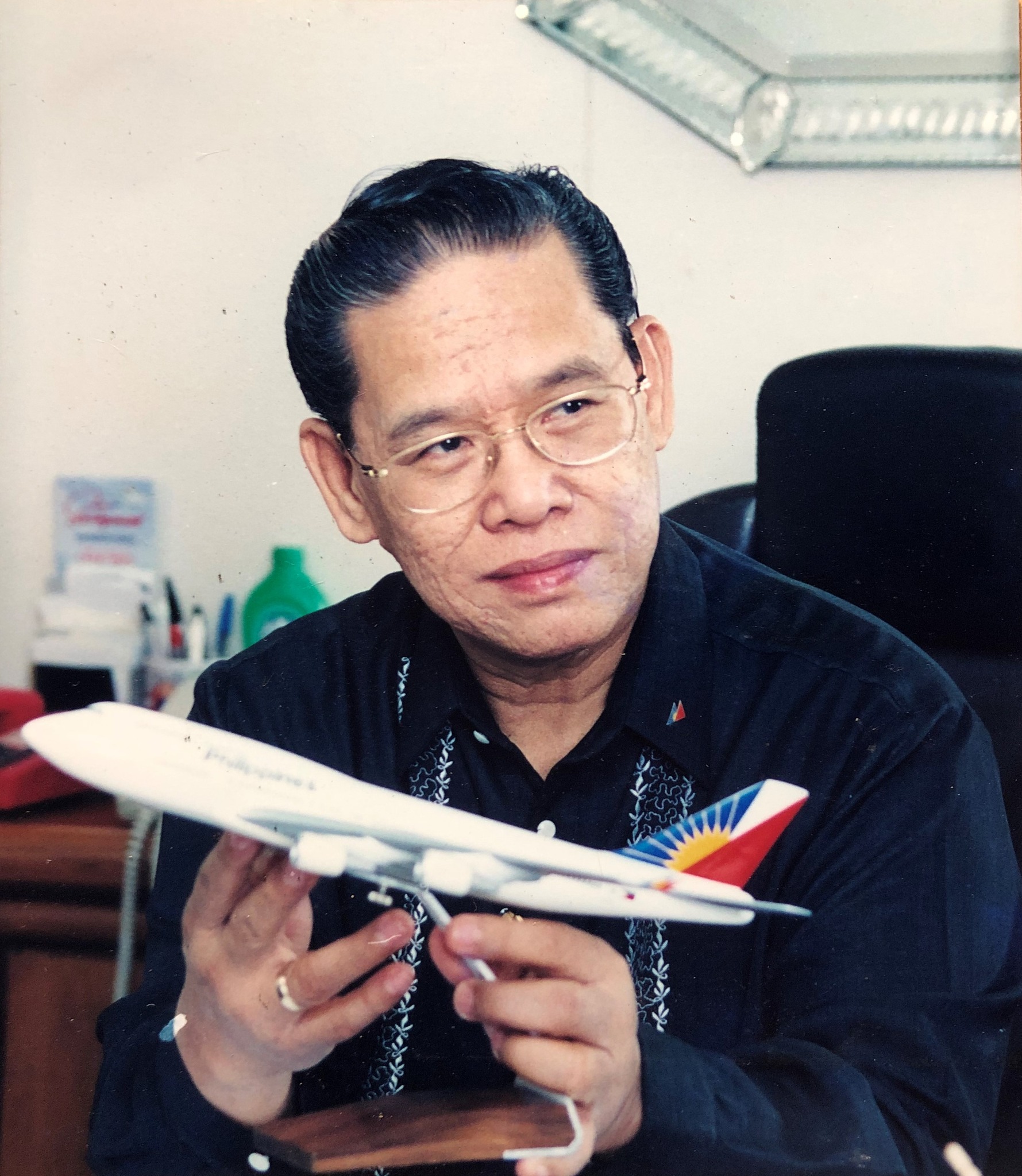
You’d think you would know the ins and outs of something that’s been told to you since childhood. I thought I knew all I needed about my grandfather’s career, but recent activity in school finally made it all sink in.
I had to conduct an oral history interview for an activity in one of my college classes. I was given free rein to choose my interviewees and was tasked with making a reflection paper about them. Like many of my classmates, I chose a family member. It just so happens that my grandfather is Avelino Zapanta.
I already wrote and passed my reflection paper, but I figured I might as well post a more personal version. I had a lot of thoughts while I was writing, after all.
My grandfather: A background
As the grandchild of Dr. Zapanta, I have had the privilege of growing up with tales of his remarkable journey, from his early days at Philippine Airlines (PAL) to his pivotal role as the President and Chief Operating Officer (COO) during a crucial period in the company’s history.

The first thing my grandfather did after being put into his position was create a line of communication between the management and the workforce. For his entire tenure, he kept the workers informed of the airline’s progress, discussing financial statements and staying transparent with all the workstations in Philippine Airlines.
He is right, of course. Perhaps I am biased, having lived with him for most of my life, but I’ve learned that transparency is key to better communication. It is much better to win someone’s trust through transparency, even if there is bad news, than to keep sugar-coating everything and hiding the bad parts.
My grandfather has significantly more achievements than we had time to discuss. I always hear about it, after all. He’s a wealth of aviation knowledge, even current aviation, to the point that he is sometimes invited to talk about aviation. He’s a primary source for a crucial part of PAL’s history and current functionality. I fully believe that he is what PAL needed when workers doubted their management, and perhaps, in another world, PAL would not be here if Dr. Zapanta hadn’t been there.
Our recorded interview shows there’s always more to history than we read about. When we Google Dr. Zapanta, we find articles about how he saved PAL and how PAL miraculously recovered during his tenure. We rarely hear about how he did it. Even I had never heard of this insider information before our interview, and I love asking him questions about his story.
Learning, recording: From a granchild’s perspective
I didn’t think I’d learn more personally during the interview. I grew up hearing most of the same stories, and I always loved asking Dr. Zapanta—my grandfather—questions about his career. Still, it was always about his work as president, rarely about his time at PAL before it. I already knew he had to be hardworking to be able to do what he did, but hearing about his first management position put into perspective just how hardworking he had to be.

“If one Googles Dr. Avelino Zapanta’s name, it’s easy to find news articles and magazines. Many call him a miracle worker for pulling PAL from the brink of bankruptcy and into the new century, but most praise him for being the face of PAL in a crisis.
However, Dr. Zapanta’s introduction did not start with his career. He spent the first part of his introduction talking about his family, his six children, and a passing mention of his grandchildren. It provides an insight into Dr. Zapanta’s character—how, of his long list of achievements, he seems to consider his family at the top.”
Both paragraphs above are direct excerpts from my reflection paper. I’ve Googled my grandfather before—I knew what the articles said about him. I also know that he’s hardworking, and of course, he loves us. But I never considered that he put his family on top of his list of achievements. I never thought someone would talk about their family before they talk about being the savior of PAL.
There’s a part of our conversation that I didn’t record. After I hit the end button, I asked more questions that weren’t on my list. As I said, I love asking my grandfather questions.
I wish I recorded it. If I had recorded our conversation, it would have put into perspective why his methods worked. It’s not impossible to think that other people tried to be transparent to workers before and after his time, but how did my grandfather succeed so well? Because he worked at Philippine Airlines for three decades before becoming president and COO, and that gave him a perspective that many before him lacked.
One day, I’ll probably be crying while watching the recording. My grandfather is old, and no one lives forever, but at least in this way, I can preserve some of his knowledge and experiences. Perhaps it’ll be useful to someone else in the future, maybe for something more technical or historical. Either way, oral history has given me something other than words on paper to remember my grandfather when I can’t ask him questions anymore.
That’s the significance of oral history, I believe. It’s history, but it’s different from written history. This is straight from a primary source, and many times, it’s personal. It’s our new way of recording history, and everything preserved in this way is an insight into the cultures of our country.
If PAL’s history is ever taught to people, perhaps this recording may be useful. That’s the beauty of oral history, I think. No matter the subject, there is a history and insight to the people being recorded. It’s a preservation of their cultures—a preservation of who they were, for when they’re gone. It’s history, and like my grandfather, I’ve always been for preserving history.
Read Also
- I Wrote a Book About Being a Work-From-Home Mom (And Yes, There’s a Chapter About Cereal for Dinner)
- How My Kids’ Christmas Lists Evolved From Crumpled Paper to Shopee Links (And Why I’m Never Going Back)
- Soundcore A20i Review: The ₱600 Earbuds My Kids Actually Like (and Don’t Break in a Week)
- How I Learned to Spot Fake Reviews on Shopee and Lazada
- Ergonomic Essentials for a Healthier Work-from-Home Setup
